The Bleed app is now available!


Reasons why my period could be late
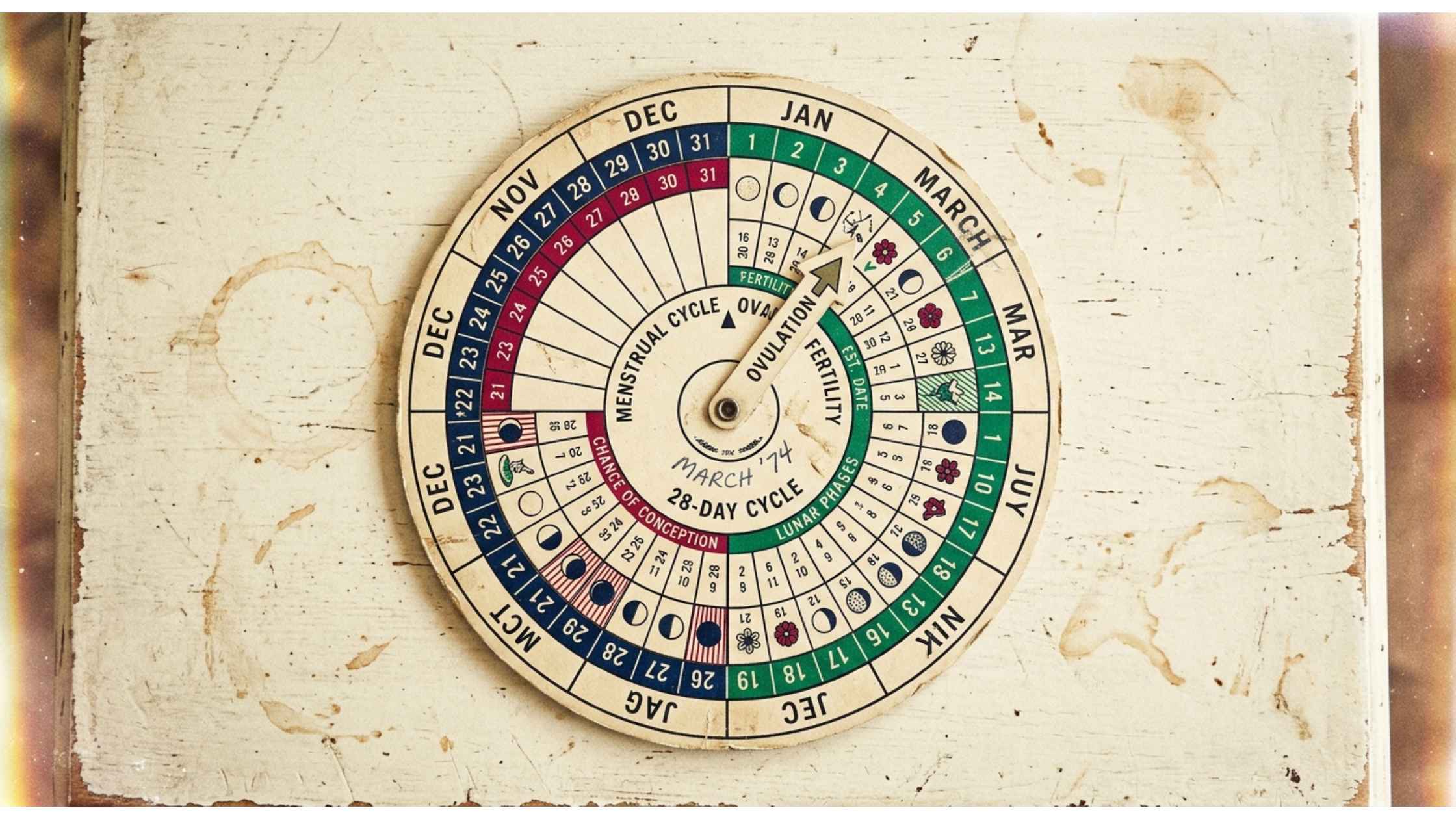
You took the pregnancy test. It is negative. Now you are scrolling. Let me save you the algorithm spiral.
The honest answer: a long list of things can delay or pause your cycle, and most have nothing to do with being pregnant. Your HPO axis (hypothalamus, pituitary, ovaries) reacts to more than most people realise. Here are the most common causes, ranked roughly by how often they actually show up.
When is "late" actually late?
The classic 28-day cycle is an average, not a rule. In a study of 612,613 cycles from over 124,000 women, mean cycle length was 29.3 days, with substantial variation between people and across months (Bull et al, npj Digital Medicine 2019).
ACOG defines the 95th percentile of cycle length as 90 days. A period a few days off your usual pattern is normal noise. A period two weeks off, or absent for months, is worth looking at. Three or more missed cycles in a row counts as secondary amenorrhea.
1. Stress
Stress is the most common reason a period is late and the most under-acknowledged. Chronic or acute stress raises cortisol and CRH, which suppress the GnRH signal driving your cycle. Less GnRH means less LH and a delayed or skipped ovulation. The clinical name is functional hypothalamic amenorrhea (Endocrine Society guideline, Gordon et al 2017).
If your life got hard, your period got late. Not a coincidence.
2. Low energy availability and exercise
Undereating relative to how much you are exercising or simply living suppresses the same axis. The modern framing is Relative Energy Deficiency in Sport, per the 2023 IOC consensus statement. It is not about weight. It is about whether your body has enough fuel to spare for the reproductive system, which it treats as discretionary.
Heavy training with not enough food does the same thing. Amenorrhea rates in long-distance runners have been reported up to 65 percent in older cohorts (Gimunová et al 2022), versus 2 to 5 percent in the general population.
3. PCOS
The most common endocrine cause of irregular periods in reproductive-age women. Pooled prevalence is 10 percent under Rotterdam criteria (Bozdag et al, Human Reproduction 2016). Cycles longer than 35 days, irregular bleeding, hirsutism, acne. If your periods have been irregular for years, this belongs in the doctor's-appointment conversation.
4. Thyroid and prolactin
Both hypothyroidism and hyperthyroidism disrupt cycles. Hypothyroidism tends toward heavy or irregular bleeding. With hyperthyroidism, periods often go light or vanish. A basic TSH catches most of it.
Elevated prolactin suppresses GnRH and causes late or absent periods, sometimes with galactorrhea (Endocrine Society guideline, Melmed et al 2011). Causes include prolactinoma, hypothyroidism, breastfeeding, and several common medications.
5. Hormonal contraception, recent changes
If you recently stopped a hormonal contraceptive, the cycle takes time to settle. Median time to first menses after stopping the combined pill is around 32 days, and 98.9 percent of women recover normal HPO function within 90 days (Mansour et al 2011). The hormonal IUD does its own thing. By 12 months, around 20 percent of levonorgestrel IUS users have amenorrhea, and roughly half by 2 years (Hidalgo 2002). Not a problem, just the device working.
6. Medications
Dopamine-blocking antipsychotics raise prolactin in around 80 percent of women who take them, often causing irregular or absent periods (Bargiota et al 2013). Other culprits: metoclopramide, some antihypertensives, opioids, high-dose corticosteroids, valproate, chemotherapy. If your period vanished after starting a new medication, talk to the prescriber.
7. Illness and shift work
Any acute illness can briefly suppress GnRH and push ovulation later. The cleanest large-scale data comes from COVID: vaccination produced a 0.71-day average increase in cycle length after dose 1 (Edelman et al, BMJ Medicine 2022). Within normal variation, but real. Flu and other infections likely do similar things.
Every 12 months of rotating shift work raises the risk of irregular cycles by roughly 13 percent (Lawson et al 2011, Nurses' Health Study II, n=71,077). Sustained jet lag and inverted sleep schedules hit the same circadian inputs.
8. Perimenopause and POI
Cycle length variability is one of the earliest signs of the menopausal transition, often starting in the mid-40s. Persistent differences of seven or more days between consecutive cycles count as early perimenopause under STRAW+10 staging (Harlow et al 2012).
Premature ovarian insufficiency affects 1 to 3.5 percent of women under 40 (ESHRE 2024 guideline). Diagnosed by four months or more of irregular or absent periods plus elevated FSH on two occasions at least four weeks apart. Worth ruling out if your periods stopped early and have not come back.
Why my period is late but not pregnant. Or: why is my period late but pregnancy test negative.
Pregnancy tests come back negative for two main reasons that are not "you are not pregnant." You tested too early (implantation happens 6 to 12 days post-ovulation, then hCG starts rising and doubles every 48 to 72 hours), or your urine was too diluted to register the hCG concentration. If your period is more than a few days late and the test was negative, retest with first-morning urine 3 to 4 days later. If still negative, the reasons why late period are somewhere in the list above.
When to see a doctor
Three or more missed cycles in a previously menstruating person warrants evaluation (ACOG, ASRM). Earlier if you have galactorrhea, hot flashes under 40, hirsutism, severe pelvic pain, or signs of an eating disorder. The initial workup is short: pregnancy test, TSH, prolactin, FSH and estradiol. That panel catches most of the causes above.
I built Bleed because most women have been told their irregular periods are "just normal." They are common as a category. They are not a non-diagnosis. Track them properly and push for the actual answer.
Pass it on.
References
- Bull JR, Rowland SP, Scherwitzl EB, Scherwitzl R, Danielsson KG, Harper J. "Real-world menstrual cycle characteristics of more than 600,000 menstrual cycles." npj Digital Medicine, 2(83) (2019). doi.org/10.1038/s41746-019-0152-7
- American College of Obstetricians and Gynecologists. "Menstruation in girls and adolescents: using the menstrual cycle as a vital sign." Committee Opinion No. 651 (2015, reaffirmed). Obstetrics & Gynecology, 126(6):e143–e146. doi.org/10.1097/AOG.0000000000001215
- Gordon CM, Ackerman KE, Berga SL, Kaplan JR, Mastorakos G, Misra M, Murad MH, Santoro NF, Warren MP. "Functional hypothalamic amenorrhea: an Endocrine Society clinical practice guideline." Journal of Clinical Endocrinology & Metabolism, 102(5) (2017). doi.org/10.1210/jc.2017-00131
- Mountjoy M, Ackerman KE, Bailey DM, et al. "2023 International Olympic Committee's (IOC) consensus statement on Relative Energy Deficiency in Sport (REDs)." British Journal of Sports Medicine, 57(17) (2023). doi.org/10.1136/bjsports-2023-106994
- Gimunová M, Paulínyová A, Bernaciková M, Paludo AC. "The prevalence of menstrual cycle disorders in female athletes from different sports disciplines: a rapid review." International Journal of Environmental Research and Public Health, 19(21):14243 (2022). doi.org/10.3390/ijerph192114243
- Bozdag G, Mumusoglu S, Zengin D, Karabulut E, Yildiz BO. "The prevalence and phenotypic features of polycystic ovary syndrome: a systematic review and meta-analysis." Human Reproduction, 31(12) (2016). doi.org/10.1093/humrep/dew218
- Melmed S, Casanueva FF, Hoffman AR, Kleinberg DL, Montori VM, Schlechte JA, Wass JAH. "Diagnosis and treatment of hyperprolactinemia: an Endocrine Society clinical practice guideline." Journal of Clinical Endocrinology & Metabolism, 96(2) (2011). doi.org/10.1210/jc.2010-1692
- Mansour D, Gemzell-Danielsson K, Inki P, Jensen JT. "Fertility after discontinuation of contraception: a comprehensive review of the literature." Contraception, 84(5) (2011). doi.org/10.1016/j.contraception.2011.04.002
- Hidalgo M, Bahamondes L, Perrotti M, Diaz J, Dantas-Monteiro C, Petta C. "Bleeding patterns and clinical performance of the levonorgestrel-releasing intrauterine system (Mirena) up to two years." Contraception, 65(2) (2002). doi.org/10.1016/S0010-7824(01)00302-X
- Bargiota SI, Bonotis KS, Messinis IE, Angelopoulos NV. "The effects of antipsychotics on prolactin levels and women's menstruation." Schizophrenia Research and Treatment, 502697 (2013). doi.org/10.1155/2013/502697
- Edelman A, Boniface ER, Male V, Cameron ST, Benhar E, Han L, Matteson KA, Manoogian S, Pearson JT, Darney BG. "Association between menstrual cycle length and covid-19 vaccination: global, retrospective cohort study of prospectively collected data." BMJ Medicine, 1:e000297 (2022). doi.org/10.1136/bmjmed-2022-000297
- Lawson CC, Whelan EA, Lividoti Hibert EN, Spiegelman D, Schernhammer ES, Rich-Edwards JW. "Rotating shift work and menstrual cycle characteristics." Epidemiology, 22(3):305–312 (2011). pubmed.ncbi.nlm.nih.gov/21364464/
- Harlow SD, Gass M, Hall JE, Lobo R, Maki P, Rebar RW, Sherman S, Sluss PM, de Villiers TJ; STRAW+10 Collaborative Group. "Executive summary of the Stages of Reproductive Aging Workshop +10: addressing the unfinished agenda of staging reproductive aging." Journal of Clinical Endocrinology & Metabolism, 97(4) (2012). doi.org/10.1210/jc.2011-3362
- ESHRE Guideline Group on POI. "Evidence-based guideline: premature ovarian insufficiency." Human Reproduction Open, 2024(4):hoae065 (2024). doi.org/10.1093/hropen/hoae065
- Practice Committee of the American Society for Reproductive Medicine. "Current evaluation of amenorrhea: a committee opinion." Fertility and Sterility, 122(1):52–61 (2024). doi.org/10.1016/j.fertnstert.2024.02.001
Found this useful? Send it to your group chat.